Blog
Why paper tape is the right seal for food that travels
02 Oct 2026
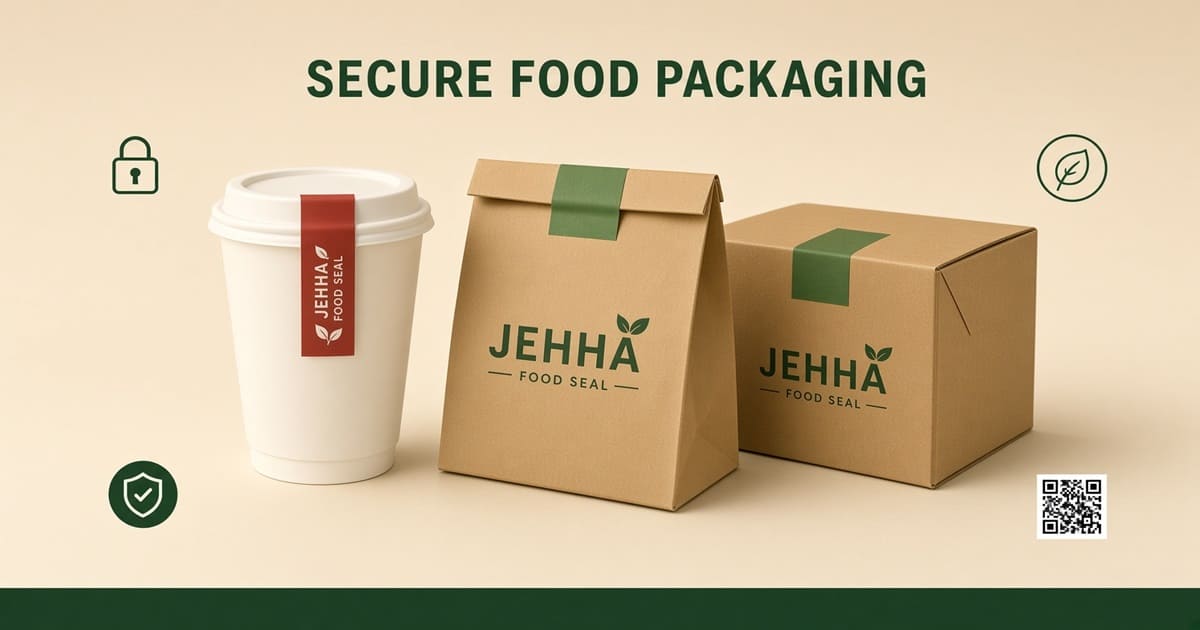
A food seal has one job on the road: show that the pack left the kitchen as it was packed. The material of that seal decides how clearly the job is done. JEHHA Food Seal uses paper tape. It is a customisable, tamper-evident seal with zero plastic, made for cups, cartons and carry bags. The paper is not a cheaper stand-in for film. It is the reason the seal can tear, print and stay out of the plastic pile.
The first benefit is tamper evidence. Paper does not lift and sit back down the way a plastic strip often can. When the tape is disturbed, the fibres break. A torn edge, a missing piece or a wrinkled join is visible at once. The guest does not need a manual. Intact paper means the opening was not crossed. Broken paper means the pack should be checked before it is eaten. That signal is the whole point of a food seal on a delivery cup, a bowl or a bag that passes through more than one hand.
The second benefit is zero plastic on the seal itself. Many kitchens still wrap an extra film around a lid because they have no other proof. That film becomes one more piece to throw away, and it can hide the pack instead of explaining it. A paper seal adds the proof without adding a plastic layer. For a brand that already talks about careful packing, the material matches the claim. The seal is the visible mark, not another wrap.
The third benefit is print. Paper takes a brand name, a photograph or a QR code cleanly. A plain closure only says the pack is shut. A printed paper seal says who shut it. The name stops the order looking generic in a pile of other deliveries. A photo can carry the kitchen’s mark. A QR can point to a menu, a feedback form or a reorder link. Customisation sits on the tape the guest actually touches, so the brand is part of the last mile, not only on the bag.
The fourth benefit is recognition across formats. The same paper seal can cross a cup lid, a carton flap and a paper bag handle. Staff learn one action: place it across the opening, press it, do not reuse a broken strip. Guests learn one look. A red, green or custom paper band becomes the kitchen’s signature, the same way a stamp becomes a bakery’s. One material, one rule, several packs.
The fifth benefit is a cleaner complaint. “The bag was open” is hard to settle after the rider has left. Paper gives both sides something to see. A torn seal is evidence. An intact seal is evidence too. It does not replace a careful pack or a careful ride. It makes the standard public, which is what a guest can use at the door.
The sixth benefit is disposal that fits the pack. A paper seal belongs with the paper bag and the carton more naturally than a plastic film does. It does not ask the guest to peel a shiny strip off a paper box and wonder which bin it belongs in. The seal was never a second product. It was the closing line of the one they ordered.
JEHHA is a brand of Wonder Polymers Private Limited, with manufacturing roots since 1986. Food Seal is the first product in that line, built for restaurants, cloud kitchens and delivery brands in India. The paper tape is the material behind the promise: reassurance of untouched contents from kitchen to home.
Paper tape will not cook the food or shorten the ride. It will show, in a way plastic film often hides, whether the pack was left alone. For a delivery brand, that is the benefit that matters.
Comments
No approved comments yet.