Blog
Why a food seal tape protects every delivery from kitchen to home
01 Oct 2026
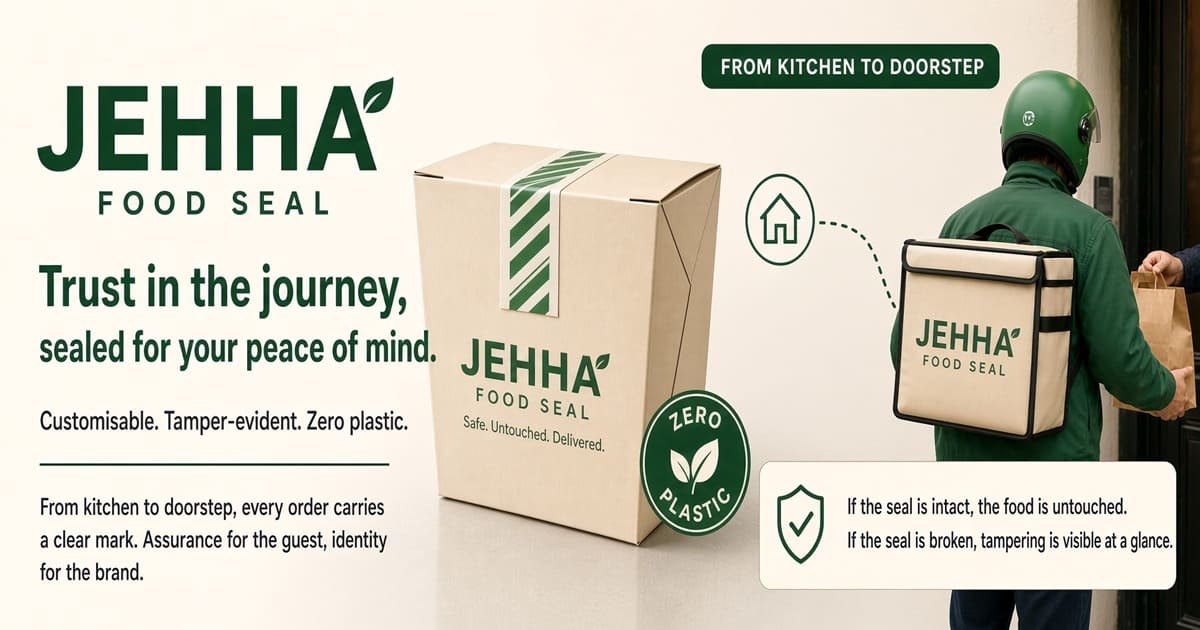
A food order does not end when the lid is closed. It ends when the guest opens the pack at home and feels sure nobody touched it on the way. That gap, from kitchen to doorstep, is where trust is either kept or lost. A food seal tape is the simplest way to close it.
JEHHA Food Seal is a customisable, tamper-evident seal with zero plastic. It sits across the cup, carton or carry bag. If the seal is intact, the contents travelled untouched. If it is broken, the interference is visible at once. The guest does not have to guess. The rider does not have to explain. The kitchen does not have to defend a pack it packed correctly.
The first benefit is reassurance. Delivery created a quiet doubt: was this cup opened after it left the counter? A seal answers that in one glance. Restaurants, cloud kitchens and QSR teams spend real effort on hygiene. The seal carries that effort to the last mile, so the work done in the kitchen is still visible at the table.
The second benefit is tamper evidence. Tape that can be lifted and pressed back is not a seal. A proper food seal is meant to show disturbance. A torn or missing strip is a signal, not a decoration. That matters for hot drinks, bowls, sweet boxes and bags that pass through more than one hand. The brand is not accusing anyone. It is giving the customer a clear mark.
The third benefit is a cleaner pack. Many kitchens still reach for an extra plastic film because they have no better proof. JEHHA is built as a zero-plastic seal, so integrity does not mean another layer of plastic on the order. For a brand that already talks about careful packing, that difference is part of the product, not a footnote.
The fourth benefit is the mark on the seal. A plain strip only says “closed”. A custom strip says who closed it. Brand name, a photograph or a QR code can sit on the seal, so every order carries the kitchen’s voice. A QR can point to a menu, a feedback form or a reorder link. A name stops the pack looking generic in a pile of other deliveries. Customisation is not only print. It is how the guest remembers who sent the food.
The fifth benefit is fewer complaints that cannot be proved. “The bag was open” is hard to settle after the fact. A seal gives both sides something to look at. Intact means the pack left as packed. Broken means it should be checked before it is eaten. That does not replace good riders or good packing. It makes the standard visible.
The sixth benefit is use across the formats a kitchen already has. The same idea works on a cup, a carton and a paper bag. One seal language across the menu is easier for staff to apply and easier for guests to recognise. Training is short: place it across the opening, press it, do not reuse a broken one.
JEHHA is a brand of Wonder Polymers Private Limited, with manufacturing roots since 1986. Food Seal is the first product in that line, made for the last mile of food in India. It is positioned as a first-time combination here: a customisable, tamper-evident food seal with zero plastic, for restaurants, cloud kitchens and delivery brands.
A seal tape will not cook the food or shorten the ride. It does one job, and it does it in public. It shows that the pack left the kitchen as the kitchen intended. For a delivery brand, that small strip is the last line of the order.
Comments
No approved comments yet.